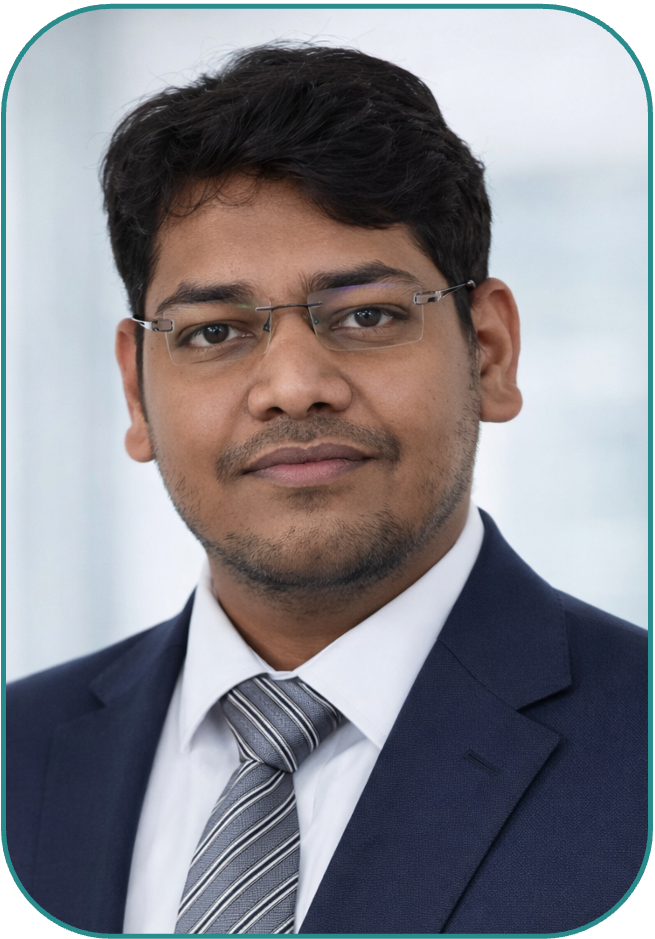
Dr. Mohd Saqib
Researcher working at the intersection of malware analysis, explainable AI, digital forensics, and applied deep learning.
Contact Information
About
Dr. Saqib is currently working as an Assistant Professor in the Information and Computer Science (ICS) Department at KFUPM, and associated with the Interdisciplinary Research Center for Intelligent Secure Systems (IRC-ISS). He is an AI and cybersecurity researcher whose work focuses on explainable AI, malware analysis, and applied deep learning. He received his PhD from McGill University, Canada, his M.Tech in Data Analytics from IIT (ISM) Dhanbad, India, and his earlier academics from Aligarh Muslim University, India. His research has appeared in leading venues, including ACM Computing Surveys, IEEE Transactions on Fuzzy Systems, IEEE ICDE, and ECML PKDD. He is a recipient of the FRQNT scholarship and has been listed in the Stanford–Elsevier Global Top 2% Scientists ranking. His broader research interests include trustworthy AI, digital forensics, and software security.
Research Areas
Malware Analysis
Research on malware understanding, detection, and security-focused analytical methods.
Explainable AI
Developing interpretable machine learning approaches that make model decisions more transparent.
Digital Forensics
Studying forensic methods for cyber investigations, evidence analysis, and trustworthy interpretation.
Applied Deep Learning
Designing deep learning systems for practical problems in cybersecurity and intelligent data analysis.
Education
PhD, School of Information Studies
Research focused on explainable AI for malware analysis.
M.Tech in Data Analytics
Graduate study in data analytics with strong emphasis on machine learning and intelligent systems.
Master of Computer Application
Advanced academic training in computer science and software systems.
B.Sc. in Computer Application
Foundation in computing, programming, and applied software development.
Projects
Hybrid Analysis-based Zero-Day Ransomware Detection
Research project hosted at Yıldız Technical University and funded by TÜBİTAK 1001, focused on advanced ransomware detection and intelligent security analysis.
Defending our Cyberspace: AI-powered Search Engine for CTI
Research work on cyber threat intelligence for predicting and counteracting cyber threats, supported by BlackBerry and Defence Research and Development Canada.
Seismic Prediction using AI
Time series and AI-driven research for seismic prediction carried out through international collaboration and supported by SERB and DST in India.
Smart Electric Vehicle Charging through Cloud Monitoring and Management
Cloud-based software solution for hybrid vehicle charging under a government-funded project focused on smart energy systems.
Experience
Assistant Professor
Current faculty position in intelligent and secure systems, teaching and research in AI and cybersecurity.
Teaching Assistant
Supported graduate teaching in information security, cryptography, software exploitation and defence, and network and endpoint security.
Visiting Scholar
Worked on explainable AI for digital forensics and malware-related cyber forensic research.
Software Engineer
Led development of web-based community software solutions using modern web technologies and cloud tools.
Patents and Publications
Patents
Publications
Awards & Recognition
Stanford–Elsevier Top 2% Scientist
Recognized among the global top 2% scientists in Information and Communication Technologies.
FRQNT Scholarship
Recipient of the Quebec provincial doctoral scholarship.
Graduate Excellence Award
Received for strong academic and research performance.
Dorothy Carruthers Prize
Recognition for publishing in an A* conference venue.
Volunteer Work
Secretary
Supporting journal-related academic coordination and activities.
PhD Students Representative
Represented doctoral students and supported communication across the school community.
Media
FRQNT Scholarship Awarded
Featured in news related to receiving the FRQNT scholarship.
Times of India Coverage
Media coverage related to debate participation and public discussion.
help4blood.com
Featured for developing a search platform for blood donor support.